
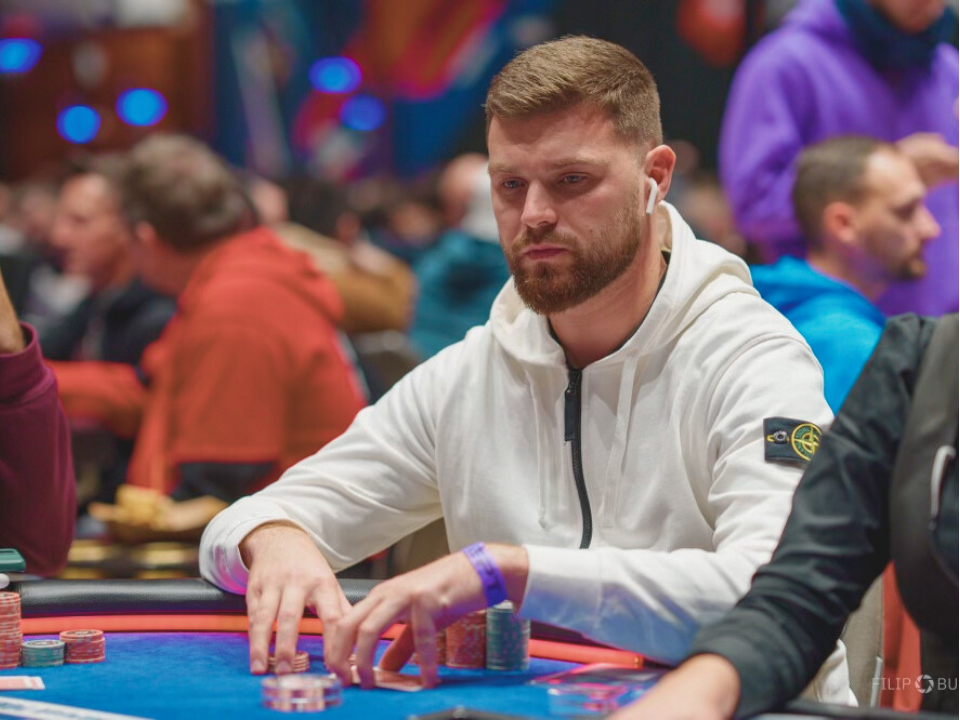
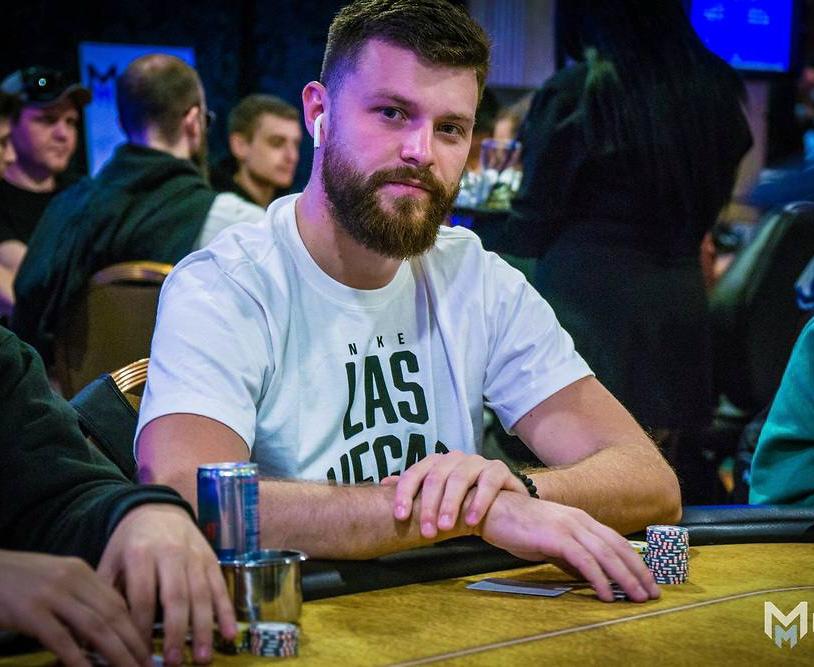
Dominik Siegl – 28 years old, originally from Czech, currently resides in Mexico. Dominik has been passionate about poker for over 10 years and, for the past three years, has been playing professionally full-time. Recently, he participated for the second time in the world’s biggest poker event—the World Series of Poker in Las Vegas.
It was during this event in Vegas that I met Dominik. The entire atmosphere pulled me in, and I had so many questions that Dominik was kind enough to answer. That’s when the idea came up to meet again—this time with a recording device in hand—and try to share some fascinating insights.
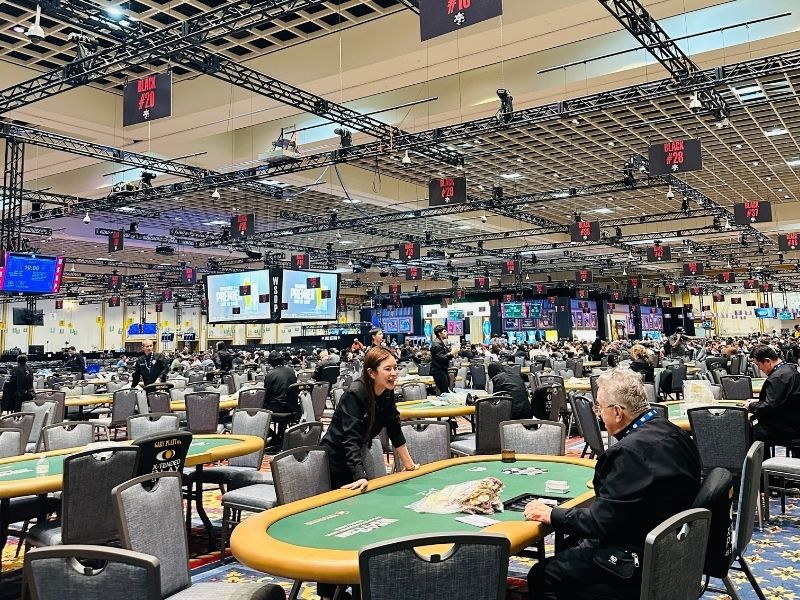
The World Series of Poker in Vegas – WSOP
Let’s reflect on the recent events. How was Vegas this year?
I have to say, compared to last year, I felt much more comfortable. Last year was more of a learning experience—getting familiar with the tournament, the casino, and the overall environment. I gained some initial experience with the Main Event, which really helped me this year.
What’s it like to compete in the world’s biggest poker tournament?
It depends on whether we’re talking about the Main Event or the smaller tournaments. Though, calling them “smaller” is a bit of a stretch—they usually attract around seven to ten thousand players. These typically begin with a qualifying day, where roughly fifteen percent of the field advances to the second day. By that point, you’re often guaranteed to cash out—usually doubling your buy-in. From there, you move on to day three, four, five…
The Main Event, however, is a whole different beast. It’s a marathon. This year, I made it to day four, playing a total of 39 hours. To make it to the final table would have taken another 40–50 hours, with the final table itself lasting an estimated 10–15 hours. Winning the whole thing takes about 100 hours of play. It’s incredibly demanding—mentally, physically, and strategically.
It must have been a shock the first time, such a marathon…
It definitely was. Tournaments in the Czech usually take two or three days. You play the first day, and by the second, there are about two or three hundred players left, and you’re already in the money. By the third day, you’re playing at the final table.
At the Main Event, however, there were still six thousand players left on day two, and three thousand on day three. By that point, you’ve already played 20 hours. Just reaching the money takes around 32 hours. That’s why it’s called the World Series—it’s not something just anyone can enter, whether due to skill or the financial commitment.
The Importance of Routine at the Tournament
What do you think is most important during such a tournament?
Having a healthy routine is key. Waking up, ideally exercising or swimming in the morning, and then diving into the casino for the tournaments. After all, the World Series is about playing live poker. Maintaining a routine and staying in the right mindset is essential.
Did you have any support there?
Yes, I had friends with me. We rented an Airbnb with a guy also from Czech, and later another friend from Opava joined us. It definitely helps to have people around who can support you—or whom you can support when things aren’t going their way. The pool of players at such a tournament is vast, and so is the likelihood of not winning even a single tournament, which can be quite frustrating.
That sounds like your experience last year…
Exactly. Last year felt more like a scouting trip. Your first Vegas is just something else. It’s an incredible six-week marathon. I recently had a coaching session where we compared it to a triathlon—a poker triathlon. It’s physically demanding, strategically challenging, and mentally exhausting.
Getting to the WSOP and the Costs Involved
How does one even get into the WSOP, and what are the costs?
The buy-in for the Main Event is $10,000, and over 10,000 players participated this year.
How do you afford that?
I qualified online. There are various satellite tournaments where you pay $100–$200, and the final rounds often award a few tickets for the Main Event. I managed to qualify for about $300, which made the trip to Vegas much easier financially.
While in Vegas, I encountered all kinds of stories. There are people from small towns who play poker in local clubs, and the entire village chips in to send their best player to the WSOP.
What makes this tournament unique compared to others?
Most tournaments with such high buy-ins attract only the best players, making them incredibly tough. But the WSOP Main Event is unique because recreational players often join to fulfill a lifelong dream.
So, for many, it’s just about participation?
That’s how I see it. For Europeans, it’s often about winning money, whereas for Americans, it’s more about the prestige of winning the bracelet and becoming a champion.
Are you a European or an American in this sense?
Definitely European. Winning the bracelet would be nice, but for me, it’s more about the money right now. Of course, I understand why someone with millions in winnings would focus on the bracelets. Phil Hellmuth, for example, has won 17 bracelets since he started playing in the 1980s. He’s had plenty of time to collect them.
What are the total expenses for a Vegas trip?
We stayed at an Airbnb, which cost about 100,000 CZK. Plus the flight. In total, it cost me around 200,000 CZK (~$9,000).
So you need to win just to cover the expenses…
The ideal scenario is breaking even. Last year, Vegas was expensive because I didn’t win anything—just covered costs. It can be a costly way to fulfill a dream.
Would you call it a fulfilled dream?
I have a friend from Krnov who dreamed of taking $10,000, putting it on the table, and playing. He got knocked out on day three, felt a bit disappointed, but ultimately fulfilled his dream. That’s not enough for me anymore. Since I’ve been playing poker for years, my dream is not just to participate but to win. My goal now is to get further than I did this year. But I need to work on a few things, learn from the experience, and try again next year.
Live vs. Online Poker
Do you prefer live poker or online games?
Definitely online.
How does a tournament in Vegas compare to your regular routine?
In Vegas, I played around 20 live tournaments the entire time. Online, I can play 40–50 tournaments in a single day.
That’s a lot. How many tables do you play simultaneously online?
I used to play 15, but that’s too much for me. Eight to ten is ideal—it gives me enough room to think. For beginners, I’d recommend starting with two tables. My younger brother sometimes plays two tables and finds it exhausting. Then he watches me play eight tables while chatting with him, and it blows his mind.
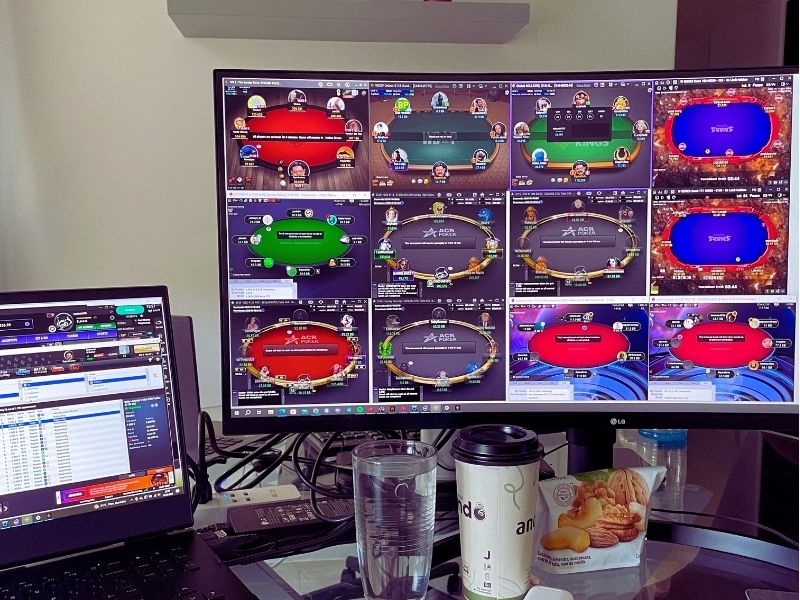
When you play so many tables, your moves must be automated. Can poker be compared to chess in this regard?
These days, poker is often compared to chess. In tournament poker, the early stages bring a lot of recurring situations, and you know exactly how to approach them. Of course, unexpected scenarios still pop up, even for seasoned players. Cash games are where recurring situations are most common and easier to study. In tournaments, as players get eliminated, studying becomes trickier. Overall, cash games are simpler to master than tournaments.
How many hours a day do you play?
During a poker series, there’s usually only one day off, typically a Friday. When there’s no series, I play about four days a week. Recently, I’ve focused more on rest because recovery is crucial. I used to underestimate this and would play 27 days a month, 10 hours a day. But now that I play higher-stakes tournaments, it’s essential to be well-rested. Higher stakes attract better players, so you really need to think instead of relying on muscle memory. Against top players, a move you’ve made a hundred times before can be recognized and countered. Rest is key to being prepared.
Are there any live tournaments besides Vegas that you can’t miss?
I’ve been considering the EPT in Barcelona at the end of August, but I’m still deciding. I never skip online series because online poker is my bread and butter. Traveling for live events, playing just five or six high-stakes tournaments, doesn’t make much sense to me. These events are costly—you need to physically be there, pay for hotels, and so on. Online poker is much more convenient. I can play from my living room, and if I lose, I finish early and still have time for dinner or relaxation.
Tournaments vs. Cash Games
Why tournaments over cash games?
(In a cash game, you can join and leave whenever you want. In tournaments, you keep playing until you win or lose.)
I started with tournaments, and they’ve always been more exciting for me. There’s adrenaline in progressing from hundreds of players to the final table. Plus, the potential for bigger payouts—multiples of your buy-in—is a huge draw. As you get closer to the money, you can put pressure on weaker players, forcing them into mistakes. Cash games don’t offer the same leverage.
I’ve played some live cash games in the U.S., which I enjoyed, but I don’t feel the same way about online cash games. In tournaments, there’s more room to progress quickly.
Poker: Gambling or Skill?
Is poker just gambling?
It’s a tough question. People who love poker will always defend it, so I won’t say that. Luck plays a role, and it’s an important one. But skills are equally crucial. It’s not like slot machines or roulette—it’s a skill-based game that requires information. The more information you have, the better you are compared to your opponent.
If luck is so significant, how do skills come into play, and how can you improve?
You need to study strategy. There are online tools and apps that run calculations for you. You input situations, your cards, and your opponent’s cards, and it provides an optimal move that earns money or prevents losses. These resources are accessible and affordable, and they’re essential these days.
In the past, people learned from books and discussed strategies with friends. Now, it’s a different game entirely.
Poker is also a lifelong journey. The more you learn, the more you realize how much you don’t know. When I discover a gap in my strategy, I’m eager to improve. I’m far from where I want to be and have plenty of room to grow.
The Professional Path
How long have you been a full-time poker player?
For the last three years. Before that, it was more of an attempt, but I needed a side job. Moving to Mexico was a turning point. The time zone helped a lot, and I met people who improved my game.
What’s the process of becoming a professional player like?
It’s a gradual path, transitioning from a recreational player to a pro. At first, you have a regular job and play poker on the side. To succeed, you need to give it your all. If you have a full-time job and spend weekends relaxing or socializing, it’ll take a long time to achieve success. But if you commit, come home from work, and treat poker as your second shift, you’ll progress faster.
Living in Mexico
You’ve lived in Mexico for the past three years. Why Mexico?
Since I mostly play with Americans, the time zone suits me perfectly. I also have a healthier routine here. Right now, I’m in the Czech Republic, and playing over the weekend completely drained me. I played from Saturday night into Sunday morning until 4 a.m. On Sunday, I couldn’t perform as well because I was exhausted. And by Monday, I was still recovering.
I can’t imagine being back in Europe, where my schedule would be flipped—I’d start playing at 6 or 7 p.m. and finish early in the morning, sleep through the day, and repeat. That’s no longer sustainable for me.
Starting in the morning and sticking to a healthy routine is a huge advantage. When I play against European players, I have a seven-hour lead. While it’s nighttime for them, it’s still afternoon for me. That kind of edge—even small details like this—can make a difference in poker winnings.
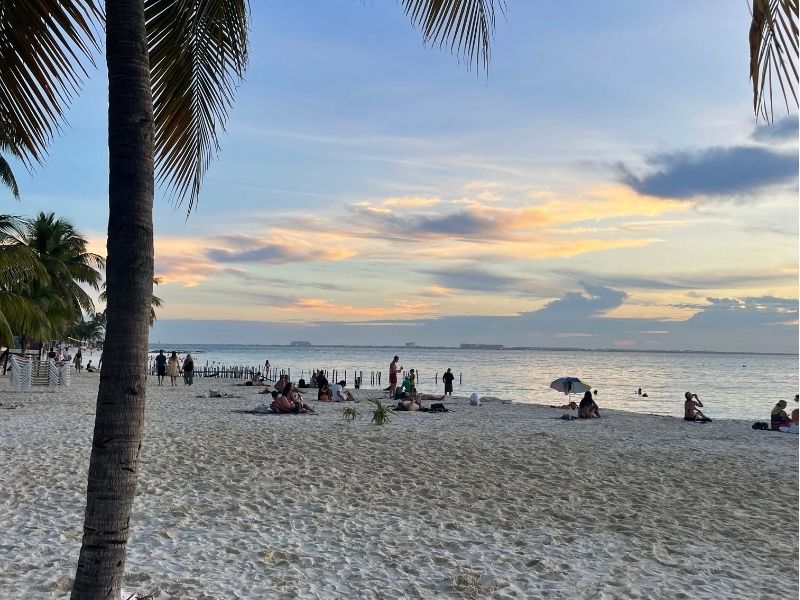
How did you come up with the idea of moving to Mexico? Why Mexico?
At first, the idea sounded completely insane to me. When I mentioned it to my family, they thought I’d lost my mind. At the time, I was living in Prague and earning a steady income from poker. I knew there were Czech players living in Mexico, so I decided to visit them—and that change of environment gave me an incredible boost.
Mexico is a beautiful country. Life in the Caribbean is amazing, plus the time zone is ideal. The place I live, Playa del Carmen, is very well-known among poker players. When I told people in the U.S. that I live in Mexico, their first question was, “Do you live in Playa?” It’s that famous. Players from all over Europe—Hungary, France, Sweden, Austria—live there.
When people think of Mexico, they often picture cartels and violence. Have you ever felt unsafe there?
Not at all. In the three years I’ve been there, I’ve never felt unsafe. Honestly, I felt more uneasy recently in London, where I spent two days after returning from Vegas. Between the U.S., the UK, and Mexico, I feel safest in Mexico.
Of course, it depends on where you are in Mexico. Playa del Carmen is a well-known tourist destination, so they take safety seriously. If someone wants to visit Mexico, I’d definitely recommend it.
Can you get by speaking only English, or do you need Spanish?
Since it’s a tourist destination, people do speak English, but Spanish is the primary language and still number one.
You mentioned that speaking Spanish can save you a lot of money. How so?
Absolutely. If you speak Spanish, you’re not seen as a tourist. For instance, you’ll pay local prices for taxis. As an English-speaking tourist, you might pay two or three times more. Everyone’s just trying to make a living, so they’ll charge tourists more if they can.
How many languages do you speak?
(Thinks for a while) I’d say four, but German and Spanish are only partial, so let’s say three. I lived in Germany as a kid. I still understand German very well, but I rarely use it, so I’m not as fluent anymore. Right now, I feel more confident in Spanish than in German. I’m completely comfortable in English and Czech.
Family and Poker
How did your family react to you pursuing poker as a career? Didn’t they want you to get a “real job”?
In the beginning, it was tough to convince them. I was determined to pursue it, but it took years for them to understand and accept it. There was a lot of resistance because poker seemed unstable, and honestly, it is, especially in the early stages.
Now, they see that poker can provide a steady income. In fact, they’ve become my biggest fans. Instead of discouraging me, they’re cheering me on. My mom, for instance, struggled with it at first. But now she sends me articles whenever she sees something about poker and even texts me good luck.
Has your mom ever visited you in Mexico?
Yes, she has. I promised her that one day I’d earn enough for her to move here permanently, so I’m working on that.
Can a poker player live a “normal” life?
What’s a normal life? 😀
Okay, so let’s use the classic: building a house, planting a tree, having kids. Where are you in that journey?
I’m somewhere in the early stages. If a normal life means having a healthy routine—playing poker during the day, spending evenings with family, and having weekends off—then it’s definitely easier for me to have that kind of life in Mexico than in the Czech Republic.
In Europe, my schedule was tough. I’d wake up in the afternoon and play poker in the evenings. In winter, there were days when I didn’t see daylight. It was manageable for a while because I had a goal and was building something. But long-term, that lifestyle isn’t sustainable.
Has poker ever caused issues in your relationships?
One relationship ended because I prioritized poker over my partner. I understand why—it was during a time when we had that “normal life” setup, working Monday through Friday and wanting to take weekend trips. But weekends are the best time for tournaments, especially Sundays, so I didn’t want to travel or do anything other than play. I was focused on poker and building what I have now.
It’s hard to find someone who’s okay with the time commitment poker demands. Between hours spent in front of a screen or traveling for tournaments, it can strain relationships. And when things aren’t going well in poker, it’s easy to be in a bad mood. Finding someone understanding and tolerant is rare.
Mindset and Resilience
Let’s talk about mindset. What happens in your head when things aren’t going well?
Doubt creeps in. “Am I doing this right? What went wrong?” That’s the worst. Doubt is something you create for yourself—it’s unnecessary but natural. When things aren’t going well for a while, it’s tough.
But if you’ve been playing long enough, you should trust your strategy and not change it just because of a bad streak. Luck plays a role in poker, and there are ups and downs—it’s cyclical. When things are bad, we call it a downswing, and it can last for months. But sooner or later, things turn around. You just need to ride it out and use the time wisely—study, learn, and improve so you’re ready when your luck changes.
Do top players ever intimidate you?
Not anymore. Last year, I played against Jason Koon, who’s kind of my idol—a role model as a player. He’s an athlete, super fit, and competes in the world’s biggest tournaments. At first, I felt some pressure, but in the end, he’s just another human being who can make mistakes.
That’s important to remember. Sure, he’ll make fewer mistakes than me or a recreational player, but he’s not infallible. If you’ve seen someone on TV and then sit at the table with them, it might feel intimidating at first. But at the end of the day, they’re just human.
If you were starting over, what would you do differently?
If I were to start over, I’d approach it more professionally right from the beginning. For a long time, I didn’t give it my all. On one hand, I didn’t know I could get this far—even though I’m not yet where I’d like to be—but I would dedicate more time to studying and training tools. Early on, I treated it more like a hobby, winning here and there. Now it’s my full-time job, and I should’ve treated it that way sooner. But that inexperience takes time to evolve.
Poker Face
What is a poker face, and what’s yours like?
A poker face is about not showing emotions. I try to be less emotionally driven and approach poker almost like a machine. Your decisions and moves should be mechanical, with no emotions attached. Emotional players might find it harder.
I remember this story from Vegas—a guy won in the first level of the tournament, jumped out of his seat, and started shouting. Everyone clapped for him as if he’d already won the tournament. He was just loudly celebrating. I aim to stay emotionally stable, though sometimes it’s tough.
Can it be learned?
If you’re naturally good at acting, you can use that to your advantage. For me, it’s about nasal breathing—it helps me stay calm. I also find a comfortable posture at the table and try not to change it. If someone fidgets, it can show discomfort, possibly a bluff. A skilled player might pick up on that and make their decision based on it.
So, a poker player is basically someone who doesn’t fidget or show emotions? 😀
When playing online, you can pace around or even jump up and down. In live poker, players often wear sunglasses or caps. I’ve never used sunglasses before, but I did during the Main Event in Vegas, and I must say—it helps. Sunglasses create a barrier. You can stare at your opponent for minutes, picking up tells that would otherwise go unnoticed. Without sunglasses, that would feel intrusive, but behind them, you’re in your own world. It also makes it harder for others to read you.
Financial Strategy and Sponsorship
How much of your net worth are you willing to put into a game?
For online sessions, I invest about 0.5–1.5% of my net worth, playing 30–50 tournaments. You need to be cautious, especially with tournament poker, since it can take months to see any success. If you’re using money you can’t afford to lose, it becomes stressful, which leads to mistakes.
If you put 20–30% of your net worth into one tournament, that’s gambling. This is where professionals differ from recreational players. Pros play consistently with smaller stakes, and losing doesn’t affect their overall situation. Recreational players tend to take big risks, pause for a while, and then gamble again.
How do sponsors work in poker? Have you had any experience with them?
Sponsorship often works through an investor (a backer or staker) who covers your buy-ins. Profits are then split, usually 50/50. If you go through a losing streak, the losses are tracked, and when you win, the losses are repaid first before splitting the profits.
This arrangement is common in poker, and it provides peace of mind. Sponsors also have a vested interest in your improvement, so they might pay for coaching or mentor you themselves. On the downside, it can feel like having a boss—they might pressure you or create stress.
I’ve had sponsors in the past but haven’t worked with one since November last year. I enjoy playing for myself now. It gives me total freedom—I don’t need to ask anyone for approval to enter a game. However, it does require maintaining a larger financial reserve.
How do you get a sponsor?
You need to improve and show results to attract someone willing to invest in you. Sponsoring a recreational player usually happens when the sponsor has blind faith in them—or is a gambler themselves. Sponsors invest thousands to tens of thousands of dollars, so they choose carefully.
Cryptocurrency and Poker Chips
Are you paid in crypto? I’ve heard it’s big in the poker world.
Yes, cryptocurrency is very common in poker and is often used for transactions. However, tournament prizes are usually paid in USD or EUR, depending on the location.
What’s with all the chip shuffling?
It’s called „shuffling,“ and it’s a part of poker culture. I find it calming. I love the sound. When I’m in a large hall, I sometimes close my eyes and just listen to the chips—it’s a unique experience, especially in Vegas.
But it can be misleading. You might see someone shuffling and assume they’re a pro, but then they make a simple mistake. That’s when you realize they’re just good at shuffling chips, not necessarily at poker.
Favorite Book and Final Advice
What’s your favorite book?
I’m not a big reader, but the last book I finished was The Healing Power of Visualization. Right now, I’m reading The Power of Now. It’s about being present in the moment, which I think is crucial in poker—getting into the flow and staying fully present.
What’s one piece of advice you’d give?
Even though poker is an individual sport, the people you meet along the way are incredibly important. I always try to work with people who are smarter than me, who can push me forward and correct my mistakes. Surrounding yourself with the right people—in poker and in life—makes all the difference.