
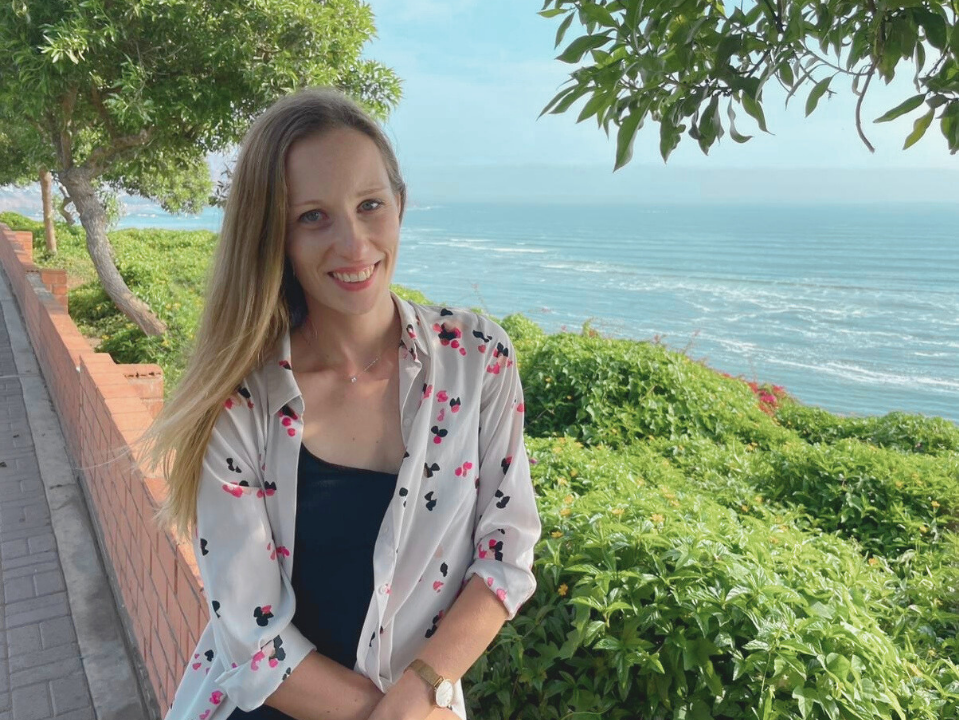
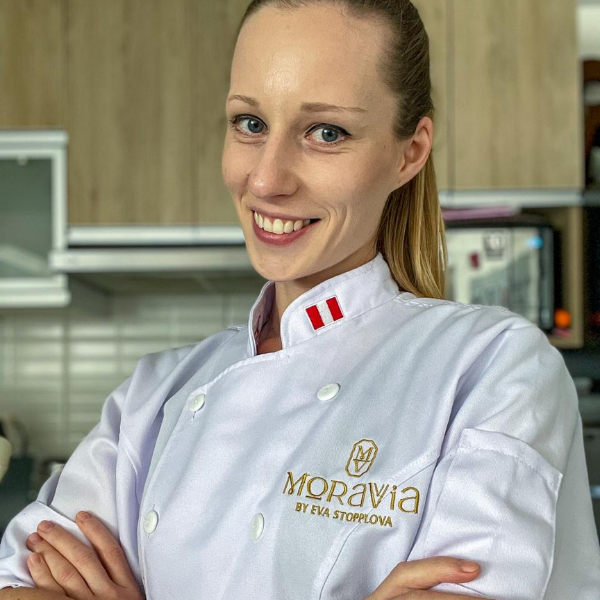
Eva Stopplova, 30 years old, originally from Czech lives currently in Lima, the bustling capital of Peru. Eva’s journey has taken her far from her roots.
In 2021, Eva made a bold move to Peru, where she launched her own business, Moravia Pastelería. She’s now married to a pilot in the Peruvian Air Force, and together they’re raising their four-year-old son, Matias.
I met Eva in Lima during my journey through South America. Although we grew up just a short distance apart in the Czech Republic, we had never crossed paths before. Our meeting was made possible through social media, where Eva kindly offered me a place to stay for a few days. I happily accepted, and this conversation was born out of that encounter.
We talked about how life led her to one of the largest metropolises in Latin America, the cultural shocks she experienced, and how she juggles running a business and being a mother—both full-time commitments.
🎧 Prefer listening or watching over reading?
You can check out the interview in both audio and video versions by clicking here: Spotify and YouTube. 🎥
Personal tip: The written version is the real gem. It delivers information in a clear, organized way, plus some extra insights that didn’t make it into the recording.
The Journey to Peru and Life in Lima
How did you end up in Peru?
In Prague, I worked in hotels, showed tourists around the city, and was used to interacting with people from all over the world. One day, a Peruvian traveler messaged me on Facebook. He was visiting Prague, and I ended up showing him around. That’s how our romance began. Later, when I got pregnant, we decided to live together in Peru. He’s in the military, so leaving his country wasn’t an option. I moved to Lima when Matias was five months old.
What was it like transitioning to life in Lima?
The first time I visited Peru was as a tourist in 2018. I saw Machu Picchu, tried local dishes, and did all the typical tourist things. But moving here permanently was a completely different story. Once I started living here, it was a massive shock. You don’t realize what’s coming until you arrive with your suitcases and have to navigate the system day in and day out. The adjustment period was tough and lasted a while.
How long did it take to get used to it?
About a year. 🙂 For that whole year, I was constantly complaining. Then I realized that complaining wasn’t going to change anything, so I decided to accept things as they were.
What bothered you the most?
Definitely the transportation. In the Czech Republic, you go to a bus stop, you know when the bus is coming, and you can count on it stopping. That concept doesn’t exist here. People wave at buses to get them to stop, but it’s not guaranteed. The bus might be coming, but if the driver has a green light, they might just keep going. There are no fixed schedules.
Most transportation here is done through taxis, and Uber works quite well. There are also apps where you set how much you’re willing to pay for a ride, and the driver either accepts your offer or counteroffers.
Lima doesn’t have a metro system. Prague, with one million people, has a metro, but Lima, with 11 million, doesn’t. The result? Everyone is in a rush to get somewhere, and the constant honking never stops.
What else surprised you about Lima?
People’s lack of awareness. For instance, a mother with a child trying to cross the street won’t get any help. Or just the general unwillingness to assist others. Basic courtesies that we take for granted in Europe are often missing here.
And then there’s the weather. They call it „Gray Lima“ because the sun only shines about 70 days a year. But this lack of sunshine is unique to Lima. Peru as a whole is diverse—it’s the only country in South America with all three regions: coast, mountains, and jungle. No other country has that. So, you can choose the kind of environment you want to live in.
What’s the quality of life like in Lima?
It depends a lot on whether you have money. If you do, you can enjoy a great life—quality food, housing, private healthcare. But the majority of people here live in poverty. The middle class in Peru is almost nonexistent.
In the Czech Republic, even if you don’t have much savings, you can still afford basic necessities like food, clothes, or a bus ticket. Here, many people sell candy on the streets just to make ends meet.
Around 70% of people in Peru live in poverty, 10% make up the middle class, and the rest are the wealthy elite.
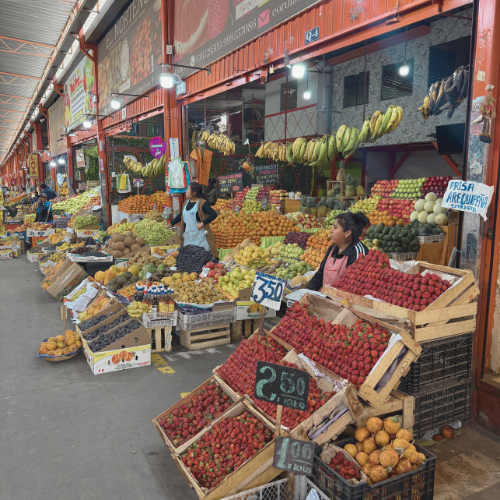
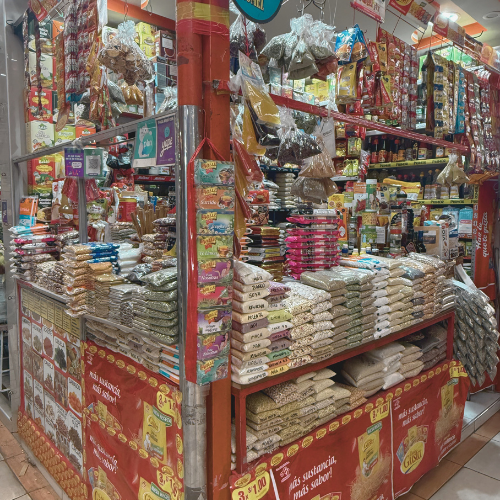
Take grocery shopping, for example. Most people can’t afford to shop in supermarkets, so they rely on markets that are open daily. These aren’t the fresh and vibrant markets you’d imagine in Europe—they’re just much cheaper than supermarkets, which are far too expensive for the majority.
How does bargaining work here?
It depends on where you are. There are places where bargaining is constant and applies to almost everything—like in downtown Lima, for example. By the way, in most cities, the downtown area is typically the best and most beautiful part of the city. Here, it’s quite the opposite. Lima’s downtown is the worst—it’s full of prostitution, criminals, and mafia activities. That’s where you can bargain for absolutely anything. And things are much cheaper there. Everything sold along the coast or in the nicer neighborhoods often comes from downtown and is resold here.
How does the quality of life in Peru compare to the Czech Republic?
In the Czech Republic, of course, there are people who have money and those who don’t, and their lifestyles reflect that. But I wouldn’t say it’s the same as here. In the Czech Republic, there’s more of a middle class. Sure, people might say they “don’t have money” because they don’t have savings, but they still have enough for food, clothes, or a bus ticket. Even if there’s no financial cushion, you don’t end up living on the streets selling candy or in a basement because you can’t afford rent.
In the U.S., I used to say that if you worked as hard as people do there, you’d live well. But now, I can’t agree with myself anymore. Here, even if you work as hard as Americans do, you won’t necessarily live well. For the first time, I see that for some people, the U.S. really can be the land of opportunity.
In Peru, people work a lot. A standard week is six days, ten hours a day. In the Czech Republic, those would be overtime hours that you’d get paid extra for. Here, that’s just the norm. And nobody cares about what’s written in your contract. If it says eight-hour days, that means nothing. You leave work only when the job is done. And the pay doesn’t reflect this effort at all. Working hard might allow you to shop at a supermarket instead of a market or live in an apartment instead of a garage.
The minimum wage here is about 6,500 CZK (roughly $300), and living costs are the same or even higher than in the Czech Republic. That’s why poverty is so widespread.
Are there areas in Lima where you wouldn’t go?
There are, and I’ve never been to them. 🙂 But I have a friend who lives in a similar area, and she’s starting to feel unsafe. I live in Barranco. It’s a neighborhood full of tourists and expats. It’s right next to Miraflores, the most touristy part of Lima. All the hotels are in Miraflores. It offers ocean views, restaurants, and shops. It’s where tourists get their picture-perfect view of Lima and enjoy their vacations. Surfing is also popular there because of the wild waves.
Can you retell the story about people building houses and the government tearing them down?
Behind our house, there used to be a neighborhood where people had built homes long ago, maybe ten years back. These weren’t exactly legal homes—they just found an empty space and built houses, often simple ones made from sheet metal. The government decided to build a new road there and gave people just a few days to move out. Within two nights, everything people had worked years to build was gone, leaving even more people homeless.
It’s also common here for people to build one story of a house, then add a second or third when they have the money. Often, this is done without supervision or permits and entirely with their own hands.
You live in a nice apartment, though. How did you manage that?
We live in a three-bedroom apartment with two bathrooms. We managed it thanks to a mortgage, but not everyone in Peru can afford one. We split it—half of the loan is mine from the Czech Republic, and the other half is my partner’s mortgage here. We bought the apartment while it was still under construction, so it was cheaper.
Building your own business
You started your own business here in Lima—Moravia Pastelería. What inspired you to start, and what led you to it?
It was definitely out of necessity—money was the driving factor. I arrived here with a five-month-old baby and didn’t want to put him in daycare since maternity leave doesn’t exist here as we know it in the Czech Republic. My only option was to work from home. So my first thought was, how can I make money working from home? What can I do to earn a living from home?
I’ve loved baking since I was a kid. I used to bake with my mom and grandma every Sunday—it wasn’t Sunday unless there was something to have with coffee in the afternoon. But I never imagined it could be my livelihood, let alone the kind of products I make now.



With my mom and grandma, we baked the classics like crumbly pies. Here, I started with cupcakes, offering them to family and friends. They’d take them to their colleagues at work. One day, I got an order from someone I didn’t know. I asked all my friends who it could be, but no one had any idea.
I created an Instagram account, and gradually, orders from strangers started coming in. When you have only 100 followers, it’s hard to sell your product. Today, I have 21,500 followers, and my videos have millions of views.
How does someone reach those numbers?
It takes a lot of time, energy, discipline, learning, and dedication. Most importantly, you need clarity. For me, there were two main things: the need for money and a clear goal of what I wanted to achieve. I was crystal clear in my mind that my time and the quality of my work didn’t match the wages offered here. You have to be confident in yourself and believe you can do more in life. Self-belief is key.
How hard is it to start a business like this in Peru?
At first, I didn’t bother researching any laws. I learned everything as I went along. For example, in the Czech Republic, it’s illegal to sell food from home, but in Peru, it’s not. Here, selling from home is completely normal.
Do they even have inspections or hygiene checks in Peru?
They do, but ironically, they mostly target those starting out in physical locations. It’s almost like they don’t want the economy to improve. The local authorities cause problems, expecting bribes before granting you permits to open a shop. So, the beginning is tough. Once you get all the permits and build your reputation, things get easier. Then it’s just about gaining and maintaining a clientele—though “just” isn’t as simple as it sounds.
Who is your clientele?
I definitely aim for the “A” clientele—people who have money, who’ve traveled to Europe or other parts of the world, and who are open to trying new things. Peruvians tend to be very nationalistic—they stick to what they know. They love their chocolate cake, vanilla cake, or carrot cake. They don’t feel the need to try anything else. Some don’t even know what mascarpone is because they’ve never heard of it, and they can’t afford to buy it.
You mentioned that people now recognize you on the street from your Instagram. Who are your followers—Peruvians or Czechs?
Definitely Peruvians, but I’d say overall it’s bakers from South America—Venezuela, Brazil, Uruguay. So, mostly South America, but 80% are Peruvians.
Do you have to pay any sort of protection money?
(Note: In some places, like Mexico, businesses often pay cartels for „protection“—essentially to avoid being robbed or to ensure safety.)
Haha, I don’t, but apparently it’s becoming a thing here too. In certain parts of Lima, people are paying protection money now.
The government, healthcare, and education in Peru
How would you rate the government in Peru?
From what I hear and see, it’s pretty useless. If the government did anything, schools would be better, transportation would work—but nothing functions properly. It’s nothing compared to the Czech Republic. Sure, it might be worse in some countries, but here, if something happens, the police don’t even bother to investigate because they wouldn’t solve it anyway. They don’t even try.
Any personal experiences with the police?
Two years ago, on Christmas Eve, our car was stolen. My husband, who’s an Air Force pilot, had all his expensive equipment in it. We dealt with it the whole day, called the police, and the car was being tracked… They wanted ransom money. We paid some of it, but we never got the car back. Well, actually, we did see it—completely dismantled in a garage. They even caught someone red-handed, but I doubt anything happened to the culprits.
It sounds like there are just too many crimes for the police to handle.
Exactly. You also have to be cautious when talking on the phone outside. A motorbike might zoom by, and suddenly your phone’s gone… The rising crime rate is partly because so many people from Venezuela are here now, and they commit crimes. Things are worse in Venezuela, so they move here.
What about healthcare?
It depends. I personally pay for private insurance at a clinic. There are good clinics and good doctors, but you have to pay for them. That said, a good clinic doesn’t always mean good doctors. Often, the best doctors work in public hospitals because they see such a wide variety of cases—they’re prepared for anything. Many of them also work at private clinics on the side.
You’re a mom, so education must be a big deal for you—what’s it like here?
You pay for everything—preschool, school, university.
But aren’t there public schools?
There are, but the quality of education is terrible. If you send your child to a public school, you’re basically saying you have nothing. Kids there are dirty, smelly… You just wouldn’t send your child into that environment.
And here, it really matters where you went to school. It determines your entire future. Employers don’t care what you know or can do; they just judge you based on your school. It’s a vicious cycle for poorer families. Their chances of success are slim.
Is school attendance mandatory?
Technically, yes, but there’s no enforcement. In the Czech, if your kid doesn’t show up at school, social services get involved. Here, if a child doesn’t attend for a month, they might call the parents to confirm the child is alive, and that’s it.
Being a mom abroad
What’s it like being a mom so far from home, without your family around to help?
Honestly, sometimes it drives me crazy. 🙂 I really miss my family. When I got pregnant, my mom passed away, so back in the Czech Republic, it’s just my dad and brother. My partner’s parents are here in Peru, and someone might say, “Well, now your family is your partner’s family,” but it’s not the same. Family from the mother’s side always feels closer. And I’m kind of an outsider—I married into the family. On top of that, they work too, so they can’t just babysit Matiask for me.
That’s what I miss about my family. Being able to drop off my kid for the afternoon and have some time to myself… I do have my husband, but his job takes him away a lot.
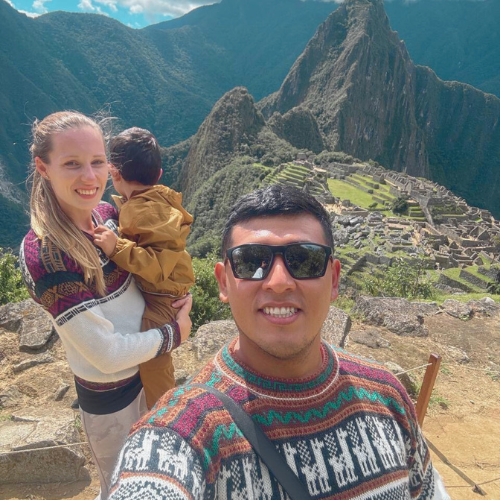
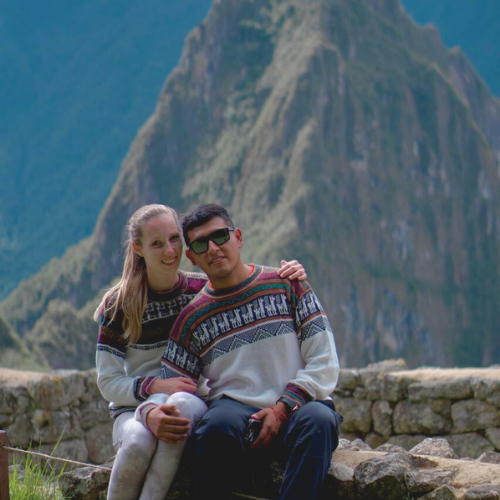
Does Matias go to preschool, or how do you manage being a full-time mom and building your own business?
It’s tough because your child senses they’re not getting 100% of your attention, and at the same time, your business takes longer to grow because it’s not getting 100% either. Trying to launch a business while being a mom means everything gets 50%, and at 50/50, nothing works properly.
Even though I want to be among the top 3 bakeries in Peru, I don’t want to stress over whether it happens in one year, three, or five. Right now, my son needs my attention, and in two years, he won’t need me as much—it’ll be more like, “Mom, leave me alone.” I don’t want to regret one day that my child doesn’t want to spend time with me because I didn’t build that bond with him.
Self-growth and the meaning of life
You seem very self-aware. How did you get to this point?
I wasn’t always like this. I used to just go with the flow and assume things happened for a reason. But after my son was born, everything shifted. If he hadn’t come along, I think I’d still be stuck in my old routine, with blinders on. For instance, I’m a very impatient person—I need everything to happen immediately. But with kids, you have to be patient because their little brains can’t process things as quickly.
Now, I recognize my impatience and know I need to work on it so that no one else has to suffer for it. If I yell, I’m teaching yelling; if I love, I’m teaching love. So, if I yell, my child will yell back, and we’ll get nowhere.
How did you come to this realization? Has anyone helped you along this journey?
The hardest step is becoming aware. A lot of people don’t even realize they’re yelling or that it’s harmful. Just acknowledging that you need help—a mentor or speaker—this step alone is huge. Saying, “Hey, I can’t handle this on my own anymore; I need someone to guide me,” is crucial. And the best person for that is someone who’s been through it—someone who started at zero and is now at 100. Someone who knows how to process emotions. Once you start becoming aware, you can’t stop. You start looking for resources.
What were your resources?
Definitely a Mexican guy named Titto Gálvez, then Javier Rodríguez from Spain—he has a wife, Valentina Ortiz, a Colombian who works exclusively with women. And then there are Americans like Tommy Robins and Brian Tracy.
What’s most important to you in life?
Loving yourself. You can be surrounded by people who love you, but if you don’t love yourself, you’ll never be truly happy.